Blog
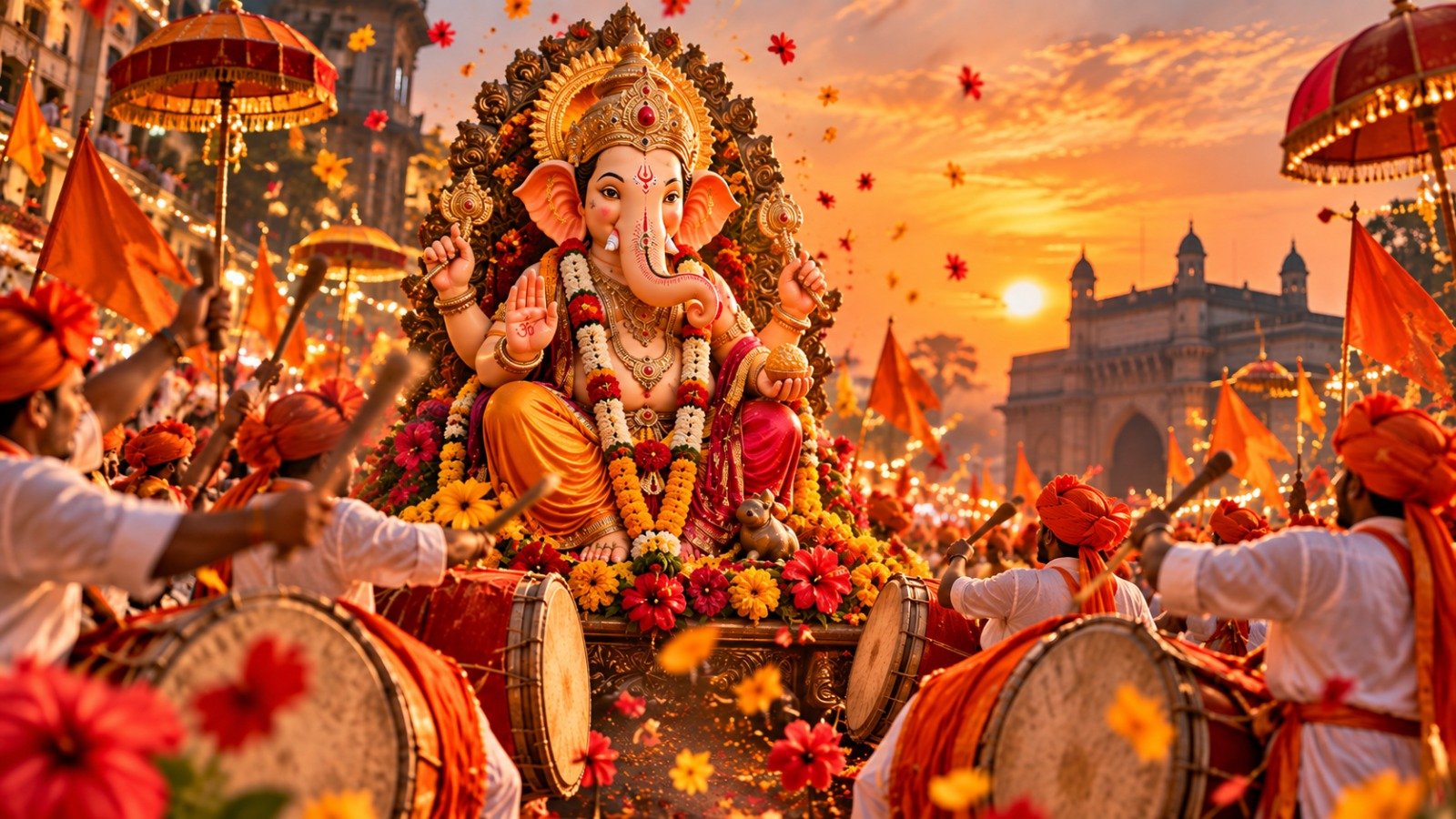
How Indian Music Breathes Life Into Ganesh Puja in Maharashtra
Walk through any street in Pune or Mumbai during Ganesh Chaturthi, and you will notice one thing before you notice anything else: the sound. Long before the eyes catch sight of the idol, the ears catch the beat of the dhol, the clang of the tasha, and the roar of "Ganpati Bappa Morya" rising from a thousand throats at once. In Maharashtra, Ganesh Puja is not just a religious festival — it is a living, breathing soundscape, and Indian music sits right at its heart.
The Dhol-Tasha: The Heartbeat of Ganeshotsav
No instrument defines Maharashtra's Ganesh festival quite like the dhol-tasha. Originally used centuries ago to rouse the spirits of soldiers before battle, the dhol and tasha found a completely new purpose in the twentieth century. In the mid-1960s, educationist Dr. Vishvanath Vinayak Pendse, popularly known as Appasaheb Pendse, is credited with organising disciplined dhol-tasha troupes in Pune schools, training young players in formation drills alongside lezim dancers. What began as a school activity soon grew into the now-famous Dhol-Tasha Pathaks — community drumming groups that can include anywhere from a handful to several hundred players.
Today, Pune alone is home to well over two hundred such pathaks, with legendary names like Dnyan Prabodhini, Garware Pathak, and Swaroop Vardhini leading processions that stretch for kilometres. Nashik, too, has carved its own identity with the globally recognised Nashik Dhol style. These groups rehearse for months, often through the monsoon, purely on community funding, because for them the beat is not a performance — it is devotion expressed through rhythm.
From Sarvajanik Utsav to a Musical Movement
The public, community-wide celebration of Ganesh Chaturthi as we know it today traces back to the 1890s, when the festival became a rallying point for social and cultural unity during the freedom movement. That transformation from a private, household ritual to a sarvajanik (public) celebration is exactly what gave Indian music its enormous canvas in Maharashtra. Processional music became more than entertainment; it became a unifying civic language, one that crossed caste, class, and religious lines. It is worth noting that dhol-tasha pathaks today proudly include groups of all genders and communities, including all-women ensembles and troupes with members from different faiths — a beautiful example of music dissolving social boundaries.
Aartis, Bhajans, and the Devotional Soundtrack
Beyond the thunder of the dhol, Ganesh Puja carries a gentler musical thread — the aarti. Every household and every mandal gathers, at least twice a day, to sing traditional aartis like "Sukhkarta Dukhharta," a composition rooted in Maharashtra's bhakti tradition. These devotional songs, performed with harmonium, taal, and collective voice, create the emotional core of the festival, standing in contrast to the high-octane energy of the streets outside.
Bollywood, Lavani, and the Modern Remix
Indian film music has also found its way deep into Ganeshotsav. Every year, new Ganpati-themed songs are released by playback singers and composers, often blending traditional dhol rhythms with contemporary Bollywood arrangements. Meanwhile, Lavani — Maharashtra's own high-energy folk tradition, driven by the dholki and known for its expressive singing and nauvari-sari performances — frequently makes an appearance at local mandal events, connecting the festival to the state's deeper folk heritage.
In recent years, this blend has evolved further. Visarjan processions on Mumbai's Girgaon Chowpatty, for instance, now often feature DJs mixing Bollywood remixes with live dhol-tasha performances, showing how Indian music continuously reinvents itself while staying rooted in tradition.
Why the Music Matters
Strip away the music, and Ganesh Puja in Maharashtra would lose much of its soul. The dhol-tasha is what gathers a neighbourhood at 5 a.m. for a final visarjan send-off. The aarti is what brings a family together in a quiet moment of devotion. The Bollywood remix is what draws in the younger generation, ensuring the festival stays alive for decades to come. Together, these musical strands — ancient, devotional, folk, and modern — weave into a single, unbroken celebration.
For anyone who wants to understand how deeply music and faith intertwine in Indian culture, there is no better classroom than the streets of Maharashtra during Ganeshotsav.