Blog
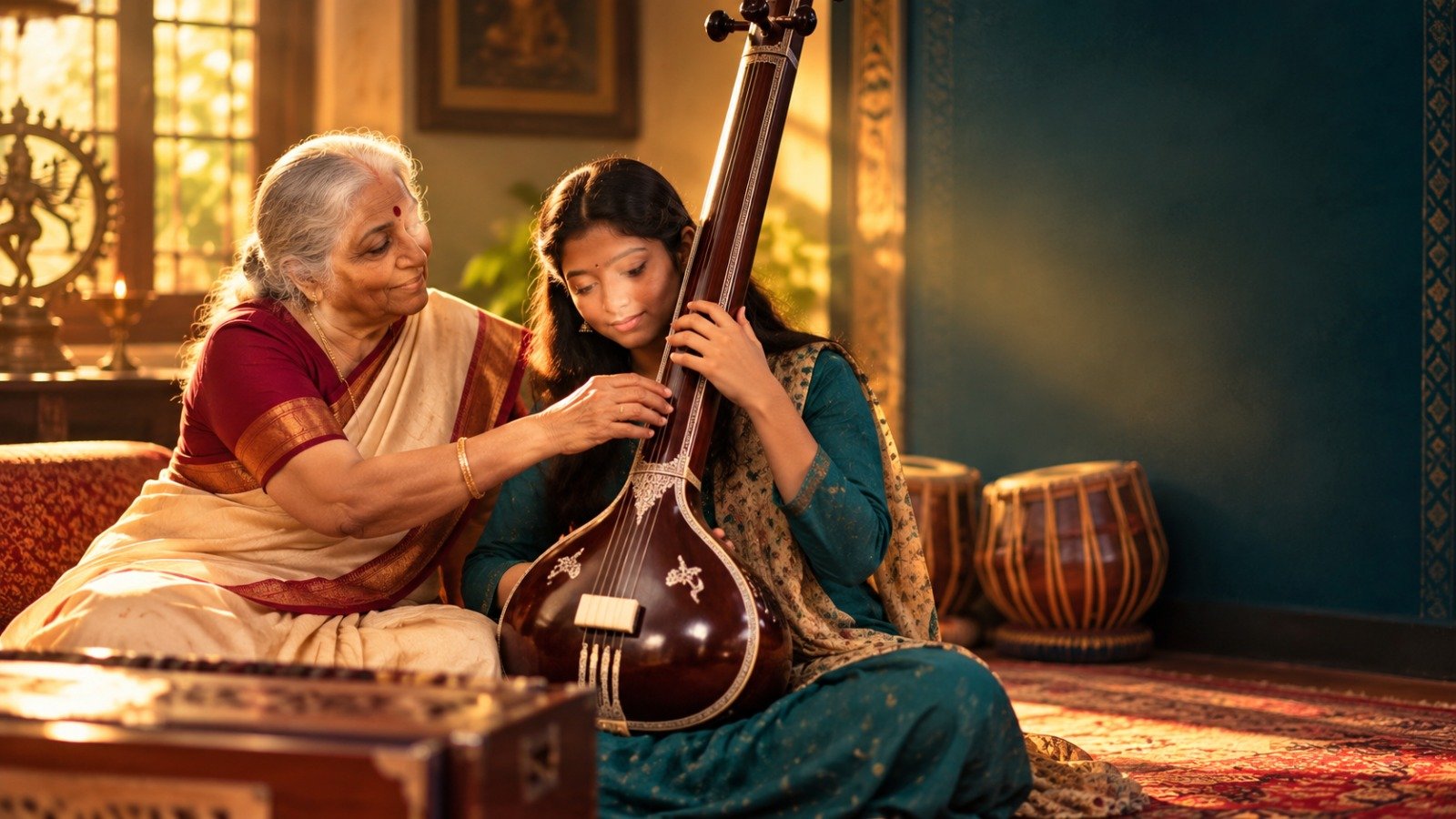
National Teachers' Day and the Quiet Revolution in Indian Music Classrooms
Every year on September 5, India pauses to remember Dr. Sarvepalli Radhakrishnan, the philosopher-president whose birth anniversary became National Teachers' Day. Students garland their teachers, schools hold assemblies, and for one day, the person at the blackboard becomes the centre of attention instead of the syllabus. But for anyone connected to Indian music, this day carries a second, older layer of meaning. Long before India had a national holiday for teachers, it had the guru-shishya parampara — a tradition where the teacher was not just an instructor but a guide for life, and where music itself was the curriculum.
This year, as Teachers' Day arrives, it feels worth asking a genuine question: what does a music class in India actually look like today, and what has changed for the people who teach it?
The Guru Is Still the Centre, Even on a Screen
Anyone who has trained in Hindustani or Carnatic music knows that the guru-shishya relationship was never meant to be transactional. A student would sit close to the teacher for years, listen before singing a single note, and absorb a raga the way a child absorbs a mother tongue — through repetition, correction, and sheer proximity. The Sangeet Natak Akademi, India's own academy for the performing arts, still treats this oral, person-to-person transmission as the backbone of how ragas, talas, and gharana styles have survived for generations.
What has changed is the room. Riyaz that once happened in a guru's home now happens over video calls, with recorded archives replacing the years a student might have spent simply sitting and listening. Platforms built around one-to-one video sessions have made it possible for a learner in London or Toronto to train directly under a guru based in Kolkata or Chennai, something that would have been unthinkable a generation ago. For artists like Dr. Soma Ghosh, whose classical and devotional repertoire reaches audiences well beyond India, or for a Rabindra Sangeet exponent teaching a new generation the songs of Tagore, this shift has widened the classroom without erasing the tradition inside it.
What Gets Gained, and What Gets Tested
The honest picture is mixed, and most teachers will say so if asked directly. Online classes have genuinely opened access — a shishya no longer needs to relocate to a guru's city, and a working professional can fit riyaz into a lunch break instead of waiting for a weekend visit. Certification, too, has become more structured, with diplomas now sitting alongside the old informal blessing of a guru who once simply declared a student "ready."
But something in the guru-shishya bond resists a screen. The tradition was built on immediate correction — a wrong swara caught the instant it happened — and on months of quiet listening before a student was taught anything at all. That kind of patient, embodied learning is hard to compress into a forty-minute video slot. Teachers who have spent decades inside this system often describe a real tension: the discipline and emotional depth of the old method against the reach and convenience of the new one. Neither side is entirely winning, and neither should have to.
Why Teachers' Day Matters Differently for Music
For a subject like mathematics or history, a good teacher explains a concept until it is understood. For music, a good teacher hands over something closer to an inheritance — a way of hearing rather than a fact to be memorised. That is precisely why National Teachers' Day sits differently in a music household. It is not only a day to thank a school teacher; it is a day to remember the person who first showed you how to hold a tanpura, correct your posture, or hear the difference between two closely related ragas.
Across Bengal this September, the same week that carries Teachers' Day also carries the memory of 22shey Shrabon, the anniversary connected to Tagore, when Rabindra Sangeet is sung with particular devotion. The two occasions, arriving so close together, are a reminder that in Indian music, teaching and remembrance are rarely separate acts.
A Tradition Learning to Hold Both Worlds
Indian music education is not choosing between the gurukul and the laptop — it is, slowly and imperfectly, learning to hold both. The guru still corrects a swara by ear, even if the sound now travels through a speaker instead of across a room. The shishya still owes a debt that cannot be paid in course fees alone.
This Teachers' Day, that debt is worth naming plainly: to every music teacher who chose patience over shortcuts, and presence over convenience, in a country that is still deciding how much of the old way it wants to keep.